7 original wall decor ideas to dress up your walls
Successful wall decor isn't about covering every available inch. A striking wall acts more like a well-placed breath of fresh air: it guides the eye, complements the furniture, and tells a story about the space. In an entryway, living room, bedroom, or even a dining area, wall decor can add depth without taking up floor space. The key is choosing the right wall, the right height, and a visual rhythm that suits the room.
Start your wall decorating ideas with the most useful wall.
The best wall isn't always the biggest. It's often the one you see when you enter, sit down, or move between two living areas. A section of wall behind a sofa, above a console table, or opposite a dining table deserves more attention than a large, unseen blank space.
This choice changes everything, because original wall decor needs a clear context. If the wall already supports a massive bookcase or a prominent window, it's best to focus your efforts elsewhere. The goal is to enhance the room, not add further visual competition.
In an entryway, the most useful wall is often the one that accommodates everyday functions: a child's coat rack, a mirror, a small shelf, or hooks. In a living room, the best support is one that complements a seat or low piece of furniture without overwhelming it.
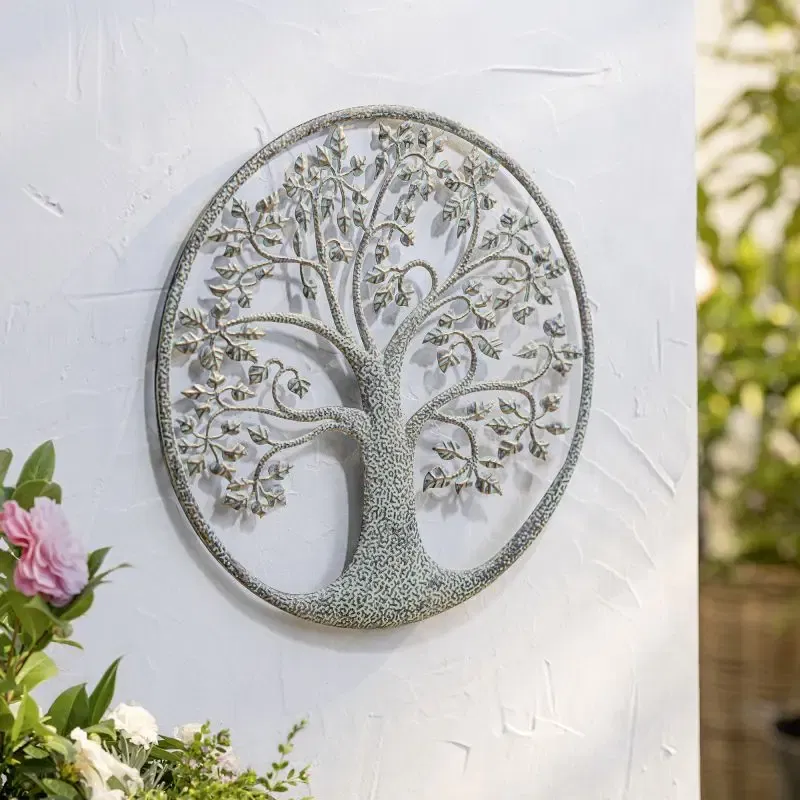
Work on height and breathing before hanging
Many compositions appear awkward not because the objects are bad, but because they are placed too high or too far apart. A handcrafted wall decoration is best appreciated when its focal point remains close to the eye. This simple rule helps avoid walls that seem to float above the furniture.
It's also important to leave some space between the pieces. A series of three items, neatly aligned or slightly staggered, often creates a greater impact than a multitude of small frames. The empty space around the pieces creates a gentle visual tension and gives each detail its rightful place.
If you're unsure, lay your pieces on the floor before drilling. Move them around, take a photo, and observe the distances. This preparation reduces mistakes and allows you to see if your wall decor ideas are still legible once they're back in place within the room's perspective.
Mixing wood wall decor and natural materials with moderation
Wood is a particularly effective material for a wall, as it brings warmth without being heavy. Wood wall decor can take the form of an engraved panel, a silhouette, a small relief, or a functional piece. The most important thing is to maintain a clear relationship between the texture, the wall color, and nearby furniture.
To enrich this base, fibers, rope, patinated metal, or ceramic can be added as complementary elements. A single secondary material is often enough to create contrast. Beyond that, the wall risks becoming cluttered and losing the desired subtlety of a unique wall decoration.
This approach works very well in a home that already contains small wooden furniture, wicker baskets, or a few handcrafted items. The material continuity helps the wall decor feel natural, as if it extends the room rather than being superimposed on it.
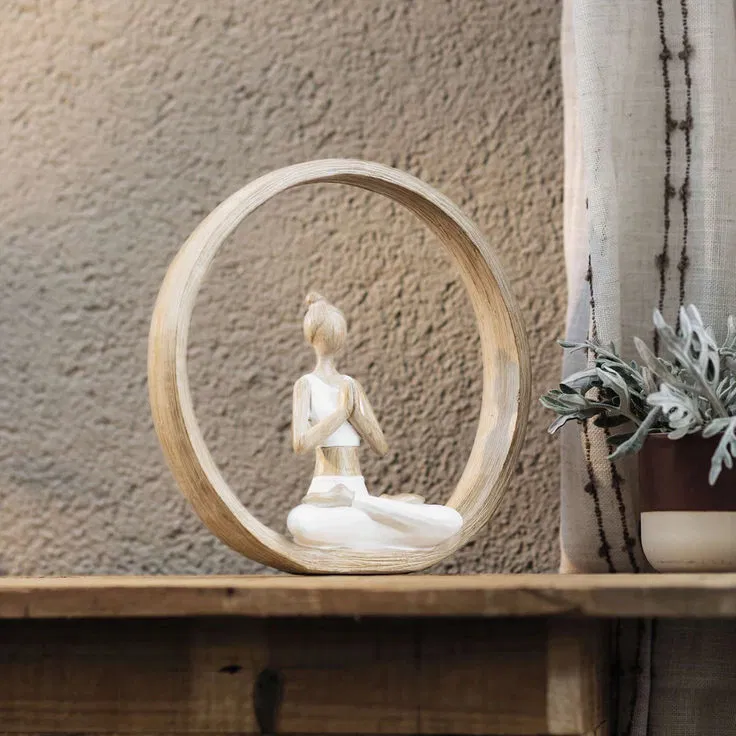
Compose in groups to avoid the catalogue wall
A cohesive wall often relies on a grouping logic. Three similar shapes, two functional elements with a decorative accent, or a main piece flanked by two more understated elements create an immediately understandable hierarchy. The eye knows where to rest.
This is a great way to incorporate original wall decor without overwhelming the