10 simple garden decorating ideas to transform your outdoor space
Effective garden design ideas aren't about accumulating objects. They begin with a careful consideration of the space, the light, and everyday uses. A pleasant outdoor space is created as a series of simple scenes: a welcoming entrance, a clearly defined dining area, a quiet zone near the plants, or a poetic detail visible from the house. When each choice serves a purpose and creates an atmosphere, even a small patio gains character without becoming cluttered.
How to categorize your garden decorating ideas by living areas
Before buying a lantern, a bench, or a planter, consider how the outdoor space is actually used. The flow of movement between a front door, a vegetable garden, a shed, and a dining table is different. Successful decoration follows this natural flow instead of hindering it.
The first area to address is often the main passageway. A clear visual path, marked by two matching containers, a sturdy doormat, or a light seat, immediately creates an impression of order. This focal point also prevents the handmade garden decorations from being scattered without any overall logic.
Around the table, the priority isn't to add a lot of objects, but to establish a few stable focal points. A wooden tray, a low tabletop, and two light sources are often enough to create a true scene for sharing. The setting remains clear even when the table is used every day.
Finally, leave some open space for plants or children. A garden breathes better when everything isn't constantly decorated. Empty spaces add value to the chosen pieces and allow a unique creation to stand out without unnecessary clutter.
Choose materials that stay beautiful after the rain
Materials are the true filter between a good idea and an expense quickly regretted. Outdoors, wood, patinated metal, terracotta, and certain woven materials gain depth over time when well-placed. Materials that are too fragile, on the other hand, lose their charm with the first rainy season.
Wood works beautifully to add a warm touch to a windowsill, a side table, or a wall panel against a sheltered wall. It blends easily with existing wood décor in the home, creating a seamless connection between indoors and outdoors when doors are left open in the summer.
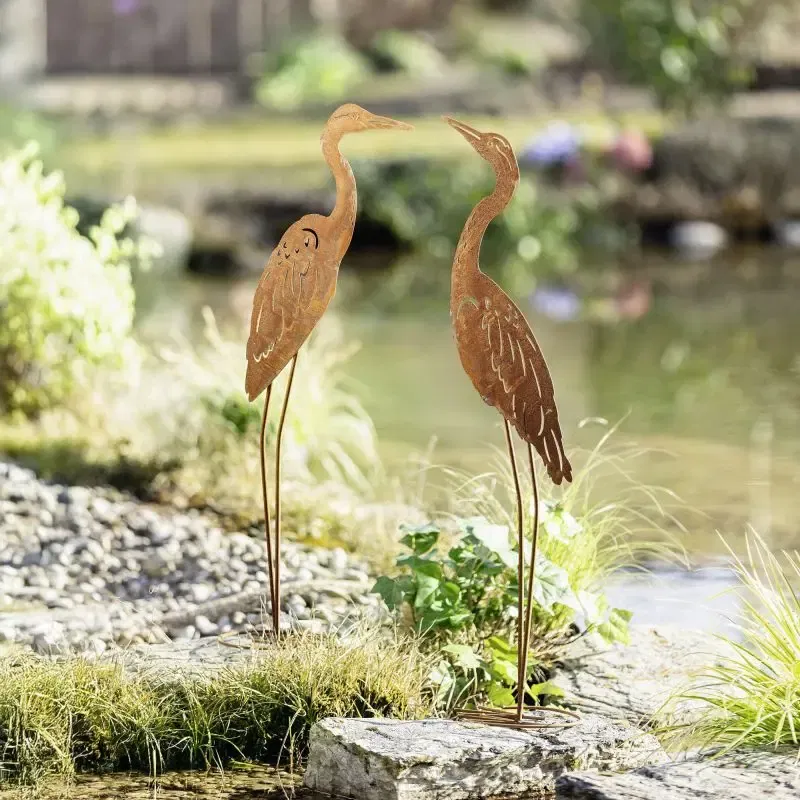
Metal finds its place in more subtle touches. A small pendant light, an antique watering can, or an animal silhouette can be enough to introduce a metal garden decor without transforming the space into a themed exhibition. The idea is not to multiply the effects but to create a clear and well-placed contrast.
When it comes to textiles, moderation is key. Two cushions with removable covers, a table runner that's easy to store, and a few well-chosen chair pads will do far more good than an abundance of hard-to-care-for fabrics. Seasonal accessories should complement outdoor living, not complicate it.
Ten easy garden decorating ideas that can be adapted without a big budget
Place two pots of different sizes on either side of a step.
- Place a small wooden box near the door to hold light tools, gloves, or freshly picked bouquets. These simple touches immediately give the impression of a thoughtfully designed and lived-in space.
- Hang a bell or a discreet hanging decoration in a sheltered corner.
- Use an old watering can as a vase for grasses or flowering branches. These objects tell a story and avoid the standardized effect often seen in hastily put-together outdoor spaces.
- Create a reading nook with a repainted chair and an extra stool.
- Place a narrow planter on a low wall to visually break up the height of the space. This type of installation works equally well in a small courtyard or on